The Living Planet Index is an indicator of the state of global biological diversity, based on trends in vertebrate populations of species from around the world.
The LPI provides the general public, scientists and policy-makers with information on trends in the abundance of the world’s vertebrates and offers insights into which habitats or ecosystems have species that are declining most rapidly. This information can be used to define the impact humans are having on the planet and for guiding actions to address biodiversity loss.
Read more in Wikipedia:
http://en.wikipedia.org/wiki/Living_Planet_Index
The Ecological Footprint measures humanity's demand on nature. For more Ecological Footprint data and to learn how it is calculated, visit: http://www.footprintnetwork.org/
The Human Development Index (HDI), developed by the UN Development Programme, compares countries on their citizens' achievement of long lives, literacy, and income. An HDI of 0.8 is considered to be the threshold for high human development. For more information on the HDI, visit: hdr.undp.org/hd
The Human Development Report 2007: http://hdr.undp.org/en/
domingo, 29 de junio de 2008

viernes, 13 de junio de 2008
La cooperación transfronteriza y la construcción europea de vínculos en Irlanda no han sido suficientes
Ayer y hoy, 12-13 de junio de 2008, hemos celebrado en Dundalk (Irlanda) una Conferencia sobre la aportación del Proceso de Paz en Irlanda a la Construcción Europea: Cross-Border Cooperation as part of the Northern Irish Peace Process: Some Lessons for Europe, organizado por el Centre for Cross Border Studies.
Aquí podéis ver el programa del evento, muy bien organizado, como todo lo que hace Andy Pollack, Director del CCBS y auténtico luchador de la Cooperación entre irlandeses:
http://www.crossborder.ie/events/lessons.php
Mientras nos reuníamos en Dundal, era el pueblo irlandés el que daba una auténtica lección a Europa. A pesar del extraordinario alcance del proceso de reconciliación y el protagonismo que ha tenido la UE, los ciudadanos irlandese no han entendido o no han querido entender la trascendencia del momento y han votado en clave interna, como suele suceder en estos casos. El resultado del referéndum irlandés para la ratificación del Tratado de Lisboa ha llenado de incertidumbre un proceso ya de por sí complejo. Ahora habrá que esperar qué se sacan de la chistera los líderes de la Unión.
A continuación, transcribo el texto de mi intervención durante la Conferencia de Dundalk, en la que me tocó responder al Sr. Dermot Ahern, Ministro de Justicia, Igualdad y Reformas Legislativas de la República de Irlanda, por aquello de la honrrilla, pero la sensación es francamente inquietante:
First of all, I would like to thank my dear colleague Andy Pollack and the Centre for CB Studies and Cooperation for the invitation to the AEBR to take part in this Conference. On the other hand, I would like to thank Minister Ahern for his words. Coming from a National State, the acknowledgment of CBC is of great importance for all of us.
Yesterday I had the chance to make the way from Dundalk to Newry and back, to meet with representatives of the East Border Region, the Newry and Mourne District Council, together with the Louth County Council, as we are planning to organize our General Assembly and Annual Conference 2010 here.
And I should say that I am extremely impressed at seeing how the border has disappeared. What one day was a real border, not only physical, but also psychological and many other things, is now a meeting place and a very important cluster for development. Some years ago, I was always talking with my Irish colleagues about peace, promotion of underdeveloped areas, measures to keep young people here, etc. Now we talk about infrastructures, new initiatives, strengthening of tourism and trade, etc.
When we listen to the Minister and the extraordinary agenda you are developing here together, the Republic of Ireland and Northern Ireland, we can see that we are in the middle of a crucial corridor Belfast-Dublin, but also of a crucial corridor for the flow of peoples’ lives.
As the Minister has said, this is also a very important day for Europe. And it could be even better after looking at the results of the referendum. So, it is not a bad day to talk about what the European Union can do for us. There are plenty of Programmes, but the AEBR’s main interest is Territorial Cooperation.
Today, CBC is on the top of the political agenda of the EU as one of the three priorities of the European regional development policy.
But, CBC has never been a national priority in many countries: anyway, it's a European task and political objective of the EU. This is justified as CBC contributes significantly to the European integration and to the implementation of the Lisbon Strategy.
When we talk about CBC in the whole Europe: old internal borders, former external borders, new internal and external borders… we realized that the diversity of Europe should be cultivated and promoted. This diversity is reflected in the social and cultural life of all states and regions of Europe. Over the centuries these various cultures and social systems have led to certain administrative structures and powers, fiscal and social legislations, and many other different areas of political activity.
Our citizens have grown up in these different social and cultural environments, and they will not always wish to sacrifice aspects of their everyday lives for the cause of European harmonization, particularly where this would result in the loss of Europe's diversity.
Despite the reduction of barriers along the EU's internal and external borders, these differences (including the various administrative structures and systems) will continue to exist for many decades, and will encounter each other at the borders. No state in Europe ─inside or outside the EU─ will alter its tried and trusted structures, systems and powers on account of the problems that arise in border regions.
Furthermore, no state is able to draft its laws in such a way that they harmonise with all the neighbouring states on its borders. The consequences will be felt for a long time: economic and social problems, and obstructions to cooperation affecting the population on either side of each border. Bilateral or trilateral CBC at regional/local level will therefore remain a necessity over the long term. That may not only prevent cross-border conflicts and overcome psychological barriers, but also improve the economic development on both sides of the border as it significantly contributes to the implementation of the Lisbon Strategy, and many other strategies.
How? Through CBC value added, which has been analysed by the AEBR in terms of European, political, institutional, economic and socio-cultural value added.
a) European value added: people living together in neighbouring border regions want to cooperate and thereby make a valuable contribution to the promotion of peace, freedom, security and the observance of human rights.
b) Political value added, making a substantial contribution towards:
- the development of Europe and European integration;
- getting to know each other, getting on together, understanding each other, and building trust;
- the implementation of subsidiarity and partnership;
- increased economic and social cohesion and cooperation;
- preparing for the accession of new members;
- using EU funding to secure CBC via multiannual programmes, and ensuring that the necessary national and regional cofinancing is committed in the long term.
c) Institutional value added:
- active involvement of citizens, authorities, political and social groups on both sides of the border;
- secure knowledge about one's neighbour (regional authorities, social partners, etc.);
- long-term CBC in structures that are capable of working efficiently:
- joint drafting, implementation and financing of cross-border programmes and projects; joint bank accounts
Jointly developed programmes and projects can be most effectively implemented and realised if the regional and local partners play a considerable role.
d) The socio-economic value added becomes apparent in the respective regions, albeit in different ways, through:
- the mobilisation of endogenous potential by strengthening the regional and local levels as partners for and initiators of CBC;
- the participation of actors from the economic and social sectors (for example, chambers of commerce, associations, companies, trade unions, cultural and social institutions, environmental organisations and tourism agencies);
- the opening up of the labour market and harmonisation of professional qualifications;
- additional development, e.g. in the fields of infrastructure, transport, tourism, environment, education, research and cooperation between SMEs, and job creation;
- lasting improvements in the planning of spatial development and regional policy (including the environment);
- the improvement of cross-border transport infrastructure.
e) Socio-cultural value added:
- lasting, repeated dissemination of knowledge about the geographical, structural, economic, socio-cultural and historical situation of a cross-border region (remarkably with the media's help);
- the overview of a cross-border region afforded in maps, publications, teaching material, and so on;
- the development of a circle of committed experts (multipliers), such as schools, youth and adult educational establishments, the conservation authorities, cultural associations, libraries, museums, and so forth;
- equal opportunities and extensive knowledge of the language of the neighbouring country, or dialects, as a component of cross-border regional development and a prerequisite for communication.
The main barriers to joint CBC are the different national structures of authority, administrative structures and legal systems. It must be said that CBC between regional and local authorities is of key importance.
CBC should not be seen primarily as a national foreign policy, but rather as a European domestic policy. Regional and/or local authorities used to have to engage in tough exchanges with their respective national authorities in a bid to ascertain whether or not cooperation was possible, and if so, under what circumstances and to what extent. But, nowadays, the willingness to engage in practical cooperation is firmly established.
Over the past 15 years, EU programmes designed to promote all forms of cooperation have been particularly instrumental in substantially boosting awareness of subsidiarity and partnership between local, regional, national and European players. Efforts are no longer centred on what cross-border activities local and regional authorities may engage in, but rather securing CBC in the long run, by providing both political and legal guarantees at national and European level.
This is the general framework for CBC in Europe. But then, we have the special case of Ireland. Usually, our main adversary is the National Government, but this is not the case, and I guess that Minister Ahern had something to do with this. As far as I know, he is part of our CB Family in Europe. And we can still feel it when listening to him.
But it is clear that the Irish case is a very singular one. Actually, when CBC began in this island, the main topic was Peace and Reconciliation. So, a Special EU Programme had to be implemented, in order to give a clear response from the EU to what was happening here. Many positive things were moving in Ireland, and they were moving so fast. With the implementation of the PEACE Programme, everything shows that the movement went even faster.
We have been listening carefully to the many economic advances to generate diverse activities in the economic, trade and community spheres… generating at the end of the day, a solution for another main obstacle in those days: employment.
CBC is nowadays generalized in Ireland, and many examples are used as best practises for others joining us, especially in the New Member States. In some parts of Europe, above all in Central Europe, the engagement between local and regional authorities across the border was being done as early as the Fifties. This supposed the creation of many CB structures (Euroregions), and they created afterwards the AEBR.
But, with the joining of the New Member States, at the Eastern part of Europe, we have to face very elementary difficulties once again: not only structural, economic, etc., but also regarding democratic, culture, citizens’ participation and overcoming of psychological barriers. The example of cases like the Irish one is a very important tool to design new procedures to tackle these challenges.
The experience of PEACE and INTERREG programmes in Ireland has given to us a lot of information on the many scenarios we can find. One of them is precisely the constitution of cross-jurisdictional bodies, like the Irish Special EU Programmes Body, another result of the Good Friday Agreement, one more, to show clearly the will (and the results) of this society to overcame something that, looking just some years back, seemed to take decades to be solved. There is a temptation to try to use the same procedure in other cases that can be considered similar, but they are not. In any case, we should use all available information to help processes.
There is another interesting message: “PEACE programme participants are generally more likely to have contact with members of the other community than the average population in Northern Ireland.”
The neutrality of European funding is a main topic and its internationality. People feel to be part of something bigger, ever when it is difficult for them the consideration of being part of a smaller community. Here I would like to mention that, when European Elections take place, the participation rate is generally smaller that in National, Regional or Local Elections: Low Rate of participation in European Elections is the norm. But, we have studied the participation in border areas: in most of the cases, border regions participate much higher than national averages.
What can we say about making Europe? We have always said that European integration is practised at the border areas in a daily basis. So, we can consider CBC as the Laboratories for European Integration. This can be seen in the new relations between Ireland and Britain, between Spain and Portugal, Germany and Poland (despite of the football), but also at the External Borders of the Union, we can see very interesting movements related to CBC between Greece and Turkey, Finland and the Russian Federation, and many other examples with Ukraine, Belarus, Moldova, etc.
The same feeling is to be translated to the Mediterranean. Similar frameworks and policies regarding Neighbourhood should be developed with the Southern Mediterranean countries regarding many fields, but always under the umbrella of a cooperation framework, in development, in trade, in economic advance, in democracy and human rights, …
And, I can even tell you that the African Union, or the Integration System for Central America are also in close contact with us in order to develop (at their level) framework conditions for real CBC cooperation in these areas of the world.
But coming back to our case, once again we use the Irish example when we have to explain practical results of CBC and European Programmes. And everyday we have some advances, the restored Northern Ireland Executive and Assembly is a fantastic reality, the relationships with the two Governments are growing and growing, on the basis of CBC, where Ministers from both sides can meet, discuss and cooperate on manifold issues, infrastructures, development of tourism potential in many areas, but also energy, sustainable development and specific CB topics (roaming, tariffs, CB workers, students, customers, etc.).
I also agree with Minister Ahern about the need of involving everyone in CBC, especially the local level, but also civil society, and this is a reality in Ireland, especially looking at the platforms created for CBC, like the North West Region CB Group, the Irish Central Border Area Network, or the East Border Region Committee.
This is a model that we would like to transfer to other areas in Europe, and we have found very active representatives when they come to our meetings. But, there is nothing like coming to the ground and talk to the real actors. I had the chance last night to do it and I also hope to have it today and tomorrow, listening very carefully to the speakers at the very interesting programme organized by the Centre for Cross-Border Studies.
Aquí podéis ver el programa del evento, muy bien organizado, como todo lo que hace Andy Pollack, Director del CCBS y auténtico luchador de la Cooperación entre irlandeses:
http://www.crossborder.ie/events/lessons.php
Mientras nos reuníamos en Dundal, era el pueblo irlandés el que daba una auténtica lección a Europa. A pesar del extraordinario alcance del proceso de reconciliación y el protagonismo que ha tenido la UE, los ciudadanos irlandese no han entendido o no han querido entender la trascendencia del momento y han votado en clave interna, como suele suceder en estos casos. El resultado del referéndum irlandés para la ratificación del Tratado de Lisboa ha llenado de incertidumbre un proceso ya de por sí complejo. Ahora habrá que esperar qué se sacan de la chistera los líderes de la Unión.
A continuación, transcribo el texto de mi intervención durante la Conferencia de Dundalk, en la que me tocó responder al Sr. Dermot Ahern, Ministro de Justicia, Igualdad y Reformas Legislativas de la República de Irlanda, por aquello de la honrrilla, pero la sensación es francamente inquietante:
First of all, I would like to thank my dear colleague Andy Pollack and the Centre for CB Studies and Cooperation for the invitation to the AEBR to take part in this Conference. On the other hand, I would like to thank Minister Ahern for his words. Coming from a National State, the acknowledgment of CBC is of great importance for all of us.
Yesterday I had the chance to make the way from Dundalk to Newry and back, to meet with representatives of the East Border Region, the Newry and Mourne District Council, together with the Louth County Council, as we are planning to organize our General Assembly and Annual Conference 2010 here.
And I should say that I am extremely impressed at seeing how the border has disappeared. What one day was a real border, not only physical, but also psychological and many other things, is now a meeting place and a very important cluster for development. Some years ago, I was always talking with my Irish colleagues about peace, promotion of underdeveloped areas, measures to keep young people here, etc. Now we talk about infrastructures, new initiatives, strengthening of tourism and trade, etc.
When we listen to the Minister and the extraordinary agenda you are developing here together, the Republic of Ireland and Northern Ireland, we can see that we are in the middle of a crucial corridor Belfast-Dublin, but also of a crucial corridor for the flow of peoples’ lives.
As the Minister has said, this is also a very important day for Europe. And it could be even better after looking at the results of the referendum. So, it is not a bad day to talk about what the European Union can do for us. There are plenty of Programmes, but the AEBR’s main interest is Territorial Cooperation.
Today, CBC is on the top of the political agenda of the EU as one of the three priorities of the European regional development policy.
But, CBC has never been a national priority in many countries: anyway, it's a European task and political objective of the EU. This is justified as CBC contributes significantly to the European integration and to the implementation of the Lisbon Strategy.
When we talk about CBC in the whole Europe: old internal borders, former external borders, new internal and external borders… we realized that the diversity of Europe should be cultivated and promoted. This diversity is reflected in the social and cultural life of all states and regions of Europe. Over the centuries these various cultures and social systems have led to certain administrative structures and powers, fiscal and social legislations, and many other different areas of political activity.
Our citizens have grown up in these different social and cultural environments, and they will not always wish to sacrifice aspects of their everyday lives for the cause of European harmonization, particularly where this would result in the loss of Europe's diversity.
Despite the reduction of barriers along the EU's internal and external borders, these differences (including the various administrative structures and systems) will continue to exist for many decades, and will encounter each other at the borders. No state in Europe ─inside or outside the EU─ will alter its tried and trusted structures, systems and powers on account of the problems that arise in border regions.
Furthermore, no state is able to draft its laws in such a way that they harmonise with all the neighbouring states on its borders. The consequences will be felt for a long time: economic and social problems, and obstructions to cooperation affecting the population on either side of each border. Bilateral or trilateral CBC at regional/local level will therefore remain a necessity over the long term. That may not only prevent cross-border conflicts and overcome psychological barriers, but also improve the economic development on both sides of the border as it significantly contributes to the implementation of the Lisbon Strategy, and many other strategies.
How? Through CBC value added, which has been analysed by the AEBR in terms of European, political, institutional, economic and socio-cultural value added.
a) European value added: people living together in neighbouring border regions want to cooperate and thereby make a valuable contribution to the promotion of peace, freedom, security and the observance of human rights.
b) Political value added, making a substantial contribution towards:
- the development of Europe and European integration;
- getting to know each other, getting on together, understanding each other, and building trust;
- the implementation of subsidiarity and partnership;
- increased economic and social cohesion and cooperation;
- preparing for the accession of new members;
- using EU funding to secure CBC via multiannual programmes, and ensuring that the necessary national and regional cofinancing is committed in the long term.
c) Institutional value added:
- active involvement of citizens, authorities, political and social groups on both sides of the border;
- secure knowledge about one's neighbour (regional authorities, social partners, etc.);
- long-term CBC in structures that are capable of working efficiently:
- joint drafting, implementation and financing of cross-border programmes and projects; joint bank accounts
Jointly developed programmes and projects can be most effectively implemented and realised if the regional and local partners play a considerable role.
d) The socio-economic value added becomes apparent in the respective regions, albeit in different ways, through:
- the mobilisation of endogenous potential by strengthening the regional and local levels as partners for and initiators of CBC;
- the participation of actors from the economic and social sectors (for example, chambers of commerce, associations, companies, trade unions, cultural and social institutions, environmental organisations and tourism agencies);
- the opening up of the labour market and harmonisation of professional qualifications;
- additional development, e.g. in the fields of infrastructure, transport, tourism, environment, education, research and cooperation between SMEs, and job creation;
- lasting improvements in the planning of spatial development and regional policy (including the environment);
- the improvement of cross-border transport infrastructure.
e) Socio-cultural value added:
- lasting, repeated dissemination of knowledge about the geographical, structural, economic, socio-cultural and historical situation of a cross-border region (remarkably with the media's help);
- the overview of a cross-border region afforded in maps, publications, teaching material, and so on;
- the development of a circle of committed experts (multipliers), such as schools, youth and adult educational establishments, the conservation authorities, cultural associations, libraries, museums, and so forth;
- equal opportunities and extensive knowledge of the language of the neighbouring country, or dialects, as a component of cross-border regional development and a prerequisite for communication.
The main barriers to joint CBC are the different national structures of authority, administrative structures and legal systems. It must be said that CBC between regional and local authorities is of key importance.
CBC should not be seen primarily as a national foreign policy, but rather as a European domestic policy. Regional and/or local authorities used to have to engage in tough exchanges with their respective national authorities in a bid to ascertain whether or not cooperation was possible, and if so, under what circumstances and to what extent. But, nowadays, the willingness to engage in practical cooperation is firmly established.
Over the past 15 years, EU programmes designed to promote all forms of cooperation have been particularly instrumental in substantially boosting awareness of subsidiarity and partnership between local, regional, national and European players. Efforts are no longer centred on what cross-border activities local and regional authorities may engage in, but rather securing CBC in the long run, by providing both political and legal guarantees at national and European level.
This is the general framework for CBC in Europe. But then, we have the special case of Ireland. Usually, our main adversary is the National Government, but this is not the case, and I guess that Minister Ahern had something to do with this. As far as I know, he is part of our CB Family in Europe. And we can still feel it when listening to him.
But it is clear that the Irish case is a very singular one. Actually, when CBC began in this island, the main topic was Peace and Reconciliation. So, a Special EU Programme had to be implemented, in order to give a clear response from the EU to what was happening here. Many positive things were moving in Ireland, and they were moving so fast. With the implementation of the PEACE Programme, everything shows that the movement went even faster.
We have been listening carefully to the many economic advances to generate diverse activities in the economic, trade and community spheres… generating at the end of the day, a solution for another main obstacle in those days: employment.
CBC is nowadays generalized in Ireland, and many examples are used as best practises for others joining us, especially in the New Member States. In some parts of Europe, above all in Central Europe, the engagement between local and regional authorities across the border was being done as early as the Fifties. This supposed the creation of many CB structures (Euroregions), and they created afterwards the AEBR.
But, with the joining of the New Member States, at the Eastern part of Europe, we have to face very elementary difficulties once again: not only structural, economic, etc., but also regarding democratic, culture, citizens’ participation and overcoming of psychological barriers. The example of cases like the Irish one is a very important tool to design new procedures to tackle these challenges.
The experience of PEACE and INTERREG programmes in Ireland has given to us a lot of information on the many scenarios we can find. One of them is precisely the constitution of cross-jurisdictional bodies, like the Irish Special EU Programmes Body, another result of the Good Friday Agreement, one more, to show clearly the will (and the results) of this society to overcame something that, looking just some years back, seemed to take decades to be solved. There is a temptation to try to use the same procedure in other cases that can be considered similar, but they are not. In any case, we should use all available information to help processes.
There is another interesting message: “PEACE programme participants are generally more likely to have contact with members of the other community than the average population in Northern Ireland.”
The neutrality of European funding is a main topic and its internationality. People feel to be part of something bigger, ever when it is difficult for them the consideration of being part of a smaller community. Here I would like to mention that, when European Elections take place, the participation rate is generally smaller that in National, Regional or Local Elections: Low Rate of participation in European Elections is the norm. But, we have studied the participation in border areas: in most of the cases, border regions participate much higher than national averages.
What can we say about making Europe? We have always said that European integration is practised at the border areas in a daily basis. So, we can consider CBC as the Laboratories for European Integration. This can be seen in the new relations between Ireland and Britain, between Spain and Portugal, Germany and Poland (despite of the football), but also at the External Borders of the Union, we can see very interesting movements related to CBC between Greece and Turkey, Finland and the Russian Federation, and many other examples with Ukraine, Belarus, Moldova, etc.
The same feeling is to be translated to the Mediterranean. Similar frameworks and policies regarding Neighbourhood should be developed with the Southern Mediterranean countries regarding many fields, but always under the umbrella of a cooperation framework, in development, in trade, in economic advance, in democracy and human rights, …
And, I can even tell you that the African Union, or the Integration System for Central America are also in close contact with us in order to develop (at their level) framework conditions for real CBC cooperation in these areas of the world.
But coming back to our case, once again we use the Irish example when we have to explain practical results of CBC and European Programmes. And everyday we have some advances, the restored Northern Ireland Executive and Assembly is a fantastic reality, the relationships with the two Governments are growing and growing, on the basis of CBC, where Ministers from both sides can meet, discuss and cooperate on manifold issues, infrastructures, development of tourism potential in many areas, but also energy, sustainable development and specific CB topics (roaming, tariffs, CB workers, students, customers, etc.).
I also agree with Minister Ahern about the need of involving everyone in CBC, especially the local level, but also civil society, and this is a reality in Ireland, especially looking at the platforms created for CBC, like the North West Region CB Group, the Irish Central Border Area Network, or the East Border Region Committee.
This is a model that we would like to transfer to other areas in Europe, and we have found very active representatives when they come to our meetings. But, there is nothing like coming to the ground and talk to the real actors. I had the chance last night to do it and I also hope to have it today and tomorrow, listening very carefully to the speakers at the very interesting programme organized by the Centre for Cross-Border Studies.
jueves, 5 de junio de 2008
Perniciosas fronteras magrebíes
Artículo de Francis Ghilès, del Instituto Europeo del Mediterráneo, publicado en el Diario El País (Madrid) el jueves, 5 de junio de 2008:
El Magreb paga el precio de su desunión
http://www.elpais.com/articulo/opinion/Magreb/paga/precio/desunion/elpepiopi/20080605elpepiopi_11/Tes
El cierre de la frontera entre Argelia y Marruecos es un disparate. Los magrebíes no tienen otra alternativa que abrir las fronteras que los separan y fomentar la libre circulación de personas, mercancías y energía.
El Magreb paga el precio de su desunión
http://www.elpais.com/articulo/opinion/Magreb/paga/precio/desunion/elpepiopi/20080605elpepiopi_11/Tes
El cierre de la frontera entre Argelia y Marruecos es un disparate. Los magrebíes no tienen otra alternativa que abrir las fronteras que los separan y fomentar la libre circulación de personas, mercancías y energía.
viernes, 8 de febrero de 2008
Corbacho, impresentable
Esta es la carta que le acabo de enviar al Sr. Director del Diario El País, con acento, de España.
Querido Director del periódico que leo de forma habitual desde que me dejan leer periódicos:
Ya puestos, me gustaría dedicar mi humilde comentario a don Billy Wilder, con permiso de don Fernando Trueba.
Coincido plenamente con don don Diego Galán en su "Cámara oculta" del viernes, 8 de febrero de 2008, titulada "Qué manía con los cortos":
http://www.elpais.com/articulo/cine/mania/cortos/elpepucin/20080208elpepicin_6/Tes.
Me explico: en la ceremonia de entrega de los últimos Premios Goya (2008), se produjo una chanza inexplicable sobre una forma accesible de acercarse a la cinematografía, arte caro donde los haya: el "corto". Tan impresentable fue su mofa como importante el objeto de su chufla. Hay lugares del mundo donde no hay ni productoras, ni empresas públicas de fomento de la producción, ni ayudas a la creación. La única posibiliad de dar salida a la iniciativa audiovisual es rodar en unos pocos minutos, en el mejor de los casos de forma digital, una realidad o una idea, es decir, un "corto", para que algún amigo del ciberespacio, o alguna administración pública, financie su presentación en un festival al modo tradicional, una plataforma digital o un programa minoritario de televisión. Si sale bien la cosa, movilizará o, al menos, activará un par de voluntades.
Desde hace un lustro la Cooperación Extremeña, una forma descentralizada y altamente participativa de cooperación internacional al desarrollo diseñada por la Junta de Extremadura, promueve en el marco de su Programa de Sensibilización, Comercio Justo y Alterglobalización, un Festival Internacional de Cine, el "Festival Cine Posible" de Almendralejo, que permite que las ideas de muchos creadores, do quiera que procedan, pongan de manifiesto situaciones que de otra manera pasarían desapercibidas entre las noticias rosas, amarillas o negras que llegan de forma sistemática a los sufridos ciudadanos.
El resultado es altamente revelador para los que creen que el corto es útil, y no digamos para los que creen que la cooperación internacional para el desarrollo, o el diálogo entre civilizaciones, son posibles.
El cortometraje, además de ser generalmente un producto de alta caliad, también permite que cualquiera que tenga algo que decir utilice el lenguaje de los HH. Lumière. ¡Viva Xanadú! ¡Viva Cine Posible! ¡Viva Almendralejo!
Querido Director del periódico que leo de forma habitual desde que me dejan leer periódicos:
Ya puestos, me gustaría dedicar mi humilde comentario a don Billy Wilder, con permiso de don Fernando Trueba.
Coincido plenamente con don don Diego Galán en su "Cámara oculta" del viernes, 8 de febrero de 2008, titulada "Qué manía con los cortos":
http://www.elpais.com/articulo/cine/mania/cortos/elpepucin/20080208elpepicin_6/Tes.
Me explico: en la ceremonia de entrega de los últimos Premios Goya (2008), se produjo una chanza inexplicable sobre una forma accesible de acercarse a la cinematografía, arte caro donde los haya: el "corto". Tan impresentable fue su mofa como importante el objeto de su chufla. Hay lugares del mundo donde no hay ni productoras, ni empresas públicas de fomento de la producción, ni ayudas a la creación. La única posibiliad de dar salida a la iniciativa audiovisual es rodar en unos pocos minutos, en el mejor de los casos de forma digital, una realidad o una idea, es decir, un "corto", para que algún amigo del ciberespacio, o alguna administración pública, financie su presentación en un festival al modo tradicional, una plataforma digital o un programa minoritario de televisión. Si sale bien la cosa, movilizará o, al menos, activará un par de voluntades.
Desde hace un lustro la Cooperación Extremeña, una forma descentralizada y altamente participativa de cooperación internacional al desarrollo diseñada por la Junta de Extremadura, promueve en el marco de su Programa de Sensibilización, Comercio Justo y Alterglobalización, un Festival Internacional de Cine, el "Festival Cine Posible" de Almendralejo, que permite que las ideas de muchos creadores, do quiera que procedan, pongan de manifiesto situaciones que de otra manera pasarían desapercibidas entre las noticias rosas, amarillas o negras que llegan de forma sistemática a los sufridos ciudadanos.
El resultado es altamente revelador para los que creen que el corto es útil, y no digamos para los que creen que la cooperación internacional para el desarrollo, o el diálogo entre civilizaciones, son posibles.
El cortometraje, además de ser generalmente un producto de alta caliad, también permite que cualquiera que tenga algo que decir utilice el lenguaje de los HH. Lumière. ¡Viva Xanadú! ¡Viva Cine Posible! ¡Viva Almendralejo!
lunes, 14 de enero de 2008
Cooperación Transfronteriza en África - Cross Border Cooperation in Africa

Castellano:
El 10 de enero de 2008, una delegación de la Asociación de Regiones Fronterizas de Europa (ARFE), encabezada por su Presidente, el MPE Lambert van Nistelrooij, e integrada por François Maïtia (Vicepresidente de la ARFE y Vicepresidente de la región francesa de Aquitania) y Martín Guillermo (Secretario General de la ARFE) mantuvo una reunión en Bruselas con Stefano Manservisi, Director General de la Comisión Europea para el Desarrollo y las Relaciones con los países de África, Caribe y Pacífico.
Desde junio de 2006, la ARFE manitiene una línea de trabajo para la cooperación con instituciones africanas con el fin de desarrollar un Programa de Cooperación Transfronteriza en el continente. En aquel momento se trataba de desarrollar una serie de acciones en la región de África Occidental, en colaboración con el "Club del Sahel" de la Organización para la Cooperación y el Desarrollo Económico (OCDE). En este tiempo, la Unión Africana (UA) ha asumido este reto en el marco de todo el continente, habiéndose producido distintas reuniones al más alto nivel (Conferencia de Ministros de Asuntos Exteriores de la UA) en las que se ha mostrado un amplio consenso sobre la voluntad de establecer un Programa de Cooperación Transfronteriza genuinamente africana. Los interlocutores africanos han solicitado la colaboración de distintas instancias europeas, en especial la Comisión Europea y la ARFE.
En este marco se produce la reunión entre los responsables de la ARFE y la Comisión, estableciéndose un análisis de situación, compartiendo el interés mutuo por un Programa de este tipo e incluso diseñando una serie de acciones a desarrollar durante el año 2008:
Desde junio de 2006, la ARFE manitiene una línea de trabajo para la cooperación con instituciones africanas con el fin de desarrollar un Programa de Cooperación Transfronteriza en el continente. En aquel momento se trataba de desarrollar una serie de acciones en la región de África Occidental, en colaboración con el "Club del Sahel" de la Organización para la Cooperación y el Desarrollo Económico (OCDE). En este tiempo, la Unión Africana (UA) ha asumido este reto en el marco de todo el continente, habiéndose producido distintas reuniones al más alto nivel (Conferencia de Ministros de Asuntos Exteriores de la UA) en las que se ha mostrado un amplio consenso sobre la voluntad de establecer un Programa de Cooperación Transfronteriza genuinamente africana. Los interlocutores africanos han solicitado la colaboración de distintas instancias europeas, en especial la Comisión Europea y la ARFE.
En este marco se produce la reunión entre los responsables de la ARFE y la Comisión, estableciéndose un análisis de situación, compartiendo el interés mutuo por un Programa de este tipo e incluso diseñando una serie de acciones a desarrollar durante el año 2008:
- Inclusión de un taller sobre Cooperación Transfronteriza durante las Jornadas Europeas de Desarrollo, a celebrarse en octubre-noviembre de 2008 en Estrasburgo.
- Debate sobre la materia en el Plenario del Consejo de Cooperación de la UE.
- Organización de un Seminario conjunto con la Unión Africana sobre la Cooperación Transfronteriza y el fortalecimiento de las colectividades locales.
Estas acciones no excluyen la posibilidad de desarrollar otras en función de las necesidades y prioridades de los socios africanos, en particular en relación con el intercambio de experiencias, la generación de capacidades, la formación de facilitadores, el análisis de aspectos relacionados con la gobernanza local/regional, la promoción de la paz, etc.
English:
Last 10th January 2008 a delegation of the Association of European Border Regions (AEBR) headed by its President, the MEP Lambert van Nistelrooij, and comprised by François Maïtia (AEBR Vicepresident and Vicepresident of the French Region of Aquitaine) and Martín Guillermo (AEBR Secretary Genera) held a meeting in Brussels with Stefano Manservisi, European Commission’s Director-General for Development and Relations with African, Caribbean and Pacific (ACP) states.
Since June 2006 the AEBR keeps a working line to cooperate with African institutions in order to develop a Cross-Border Cooperation (CBC) Programme in this continent. Talks at that time were aimed to favour actions in Western Africa, in close cooperation with the OECD’s Club of the Sahel. In this time, the African Union (AU) has taken on this challenging task within the frame of the whole African territory. Several high level meetings and summits, e.g. the AU Conference of Foreign Affairs Ministers, have shown a great consensus on the will to establish a genuine African Cross-Border Cooperation Programme. African partners have also asked for the cooperation with several European authorities, as the Commission, and organizations, as the AEBR.
Therefore the European Commission and the AEBR should meet. Both parties analyzed the situation, sharing a mutual interest to support the process to achieve such a Programme, and even outlining a series of actions to be implemented in 2008:
--- Inclusion of a CBC workshop within the European Development Days next November in Strasbourg.
--- Inclusion of the topic at the Plenary Session of the EU Development Council.
--- Organization of a joint seminar AEBR-African Union on CBC and strengthening of local communities.
These actions do not exclude de possibility of developing others according to the African partners’ needs and priorities. Particular attention should be paid to the exchange of experiences, capacity building, trainers’ training, analyses of aspects related to local/regional governance, promotion of peace, etc.
Française
Le 10 janvier 2008 une délégation de l’Association des régions frontalières européennes (ARFE) se composant de son président M. Lambert van Nistelrooij, membre du Parlement européen, du vice-président de l’ARFE et vice-président de la région Aquitaine M. François Maïtia et du secrétaire général de l’ARFE M. Martín Guillermo-Ramírez a eu un entretien avec le directeur général du Développement et des Relations avec les Etats d’Afrique, des Caraïbes et du Pacifique (ACP) à la Commission européenne à Bruxelles.
Depuis juin 2006 l’ARFE entretient des contacts réguliers avec les institutions africaines pour développer un programme africain de coopération transfrontalière. A l’époque, l’objectif était de développer une série d’actions en Afrique de l’Ouest en étroite coopération avec le Club du Sahel de l’OCDE. Puis l’Union africaine (UA) s’est chargée de cette tâche importante dans le cadre d’une approche couvrant l’ensemble du territoire africain. Plusieurs rencontres et sommets à grande échelle, comme p.ex la conférence de l’UA des ministres des Affaires étrangères, ont montré qu’il y a un fort consensus et une volonté politique importante pour établir un véritable programme de coopération transfrontalière en Afrique. Des partenaires africains ont également sollicité la coopération avec plusieurs autorités européennes, c’est-à-dire la Commission européenne et avec des associations régionales comme l’ARFE.
La Commission européenne et l’ARFE sont d’avis que la coopération et la coordination de leurs efforts sont très importantes. Pendant la rencontre les deux partis ont analysé la situation en constatant leur intérêt mutuel à soutenir le processus en vue de la création d’un programme africain de coopération transfrontalière, tout en précisant un nombre d’actions à être mise en œuvre en 2008 :
Un atelier de coopération transfrontalière dans le cadre des Journées Européennes du Développement 2008 à Strasbourg.
Prise en considération du sujet lors de la session plénière du Conseil « Développement » de l’UE.
Organisation d’un séminaire conjoint Union africaine - ARFE sur la coopération transfrontalière et renforcement des collectivités locales.
Ces actions n’excluent pas la possibilité d’en développer d’autres selon les besoins et les priorités des partenaires africains. L’échange d’expériences, le renforcement des capacités, le trainers’ training, les analyses des aspects de gouvernance locale/régionale, la promotion de la paix etc. devraient attirer l’attention particulière des acteurs.
jueves, 3 de enero de 2008

¿Dónde están las fronteras de la Unión Europea?
Interesante artículo publicado el El País (España) el 2 de enero de 2008 (Autor: Andreu Missé). Su tesis principal expone que los perfiles de la Unión son cada vez más difusos, pero también incorpora las fronteras interiores como elemento de reflexión. Comienza a generalizarse el conocimiento sobre un hecho que las regiones fronterizas europeas ya llevan experimentando muchos años: la integración europea se produce en las fronteras, también y sobre todo en las internas. A mayor cooperación transfronteriza, mayor grado de integración. Este es un hecho incuestionable.
El Grupo de Reflexión que analiza qué debe ser la UE en el horizonte de 2020 o 2030 ha puesto la cuestión sobre la mesa. Todos los que trabajamos en el campo de la cooperación trasnfronteriza saludamos esta iniciativa, la seguiremos con interés y debemos aportar nuestra experiencia durante el proceso de análisis.
De hecho, la Asociación de Regiones Fronterizas Europeas ya ha puesto en circulación un borrador de análisis sobre la futura Europa más inmediata, la que comienza a partir de 2013, el próximo periodo de Fondos europeos que, en realidad, es lo que más preocupa a las regiones y municipios europeos:
(Nota para la ofi: INCLUIR TEXTOS EN LA WEB DE LA ARFE)
Lluis Basselts analiza con mucha cautela la situación de la Unión Política el 3 de enero de 2008. Éste es su artículo y, aunque algunos podríamos resultar algo más entusiastas, constitjye uno de los análisis más certeros:
Otros artículos de Andreu Missé, dentro de su reportaje sobre "El futuro de Europa", son los siguientes:
- Cae el último resto del Telón de Acero, 21 de diciembre de 2007 http://www.elpais.com/articulo/internacional/Cae/ultimo/resto/telon/acero/elpepiint/20071221elpepiint_1/Tes
Más sobre las fronteras de la Unión:
- Las fronteras de Europa se amplían hacia el Este con la adhesión de nueve nuevos Estados Miembros, 20 de diciembre de 2007: http://www.elpais.com/articulo/internacional/fronteras/Europa/amplian/inclusion/paises/elpepuint/20071220elpepuint_11/Tes
- Felipe González deberá definir las fronteras de la ampliación, 15 de diciembre de 2007: http://www.elpais.com/articulo/internacional/Gonzalez/debera/definir/fronteras/ampliacion/elpepiint/20071215elpepiint_3/Tes
- Editorial de El País del 15 de diciembre de 2007 sobre la Reflexión Europea: http://www.elpais.com/articulo/opinion/Reflexion/europea/elpepiopi/20071215elpepiopi_1/Tes
miércoles, 12 de diciembre de 2007
El problema de no hablar claro

¿Hasta cuándo vamos a seguir jugando a este juego?
"Marruecos dice que el Polisario amenaza la paz en el Magreb"
http://es.noticias.yahoo.com/rtrs/20071212/tpl-marruecos-polisario-e8f0396_1.html

¿Por qué no se habla claro con Marruecos?
¿Por qué ni siquiera lo hace la ONU?
¿Por qué se mantiene un doble discurso según se hable con saharauis o con marroquíes?
¿Por qué no afronta España su relación con el Sahara Occidental de una forma más madura (excepción hecha de la cooperación para el desarrollo y la ayuda humanitaria)?
 Campos de refugiados saharauis, 28 de abril de 2006
Delegación de la Cooperación Extremeña con Mohamed Abdelaziz,
Presidente de la República Árabe Saharaui Democrática (RASD)
y Secretario General del Frente Popular de Liberación de Saguiat-el-Hamra y Río de Oro
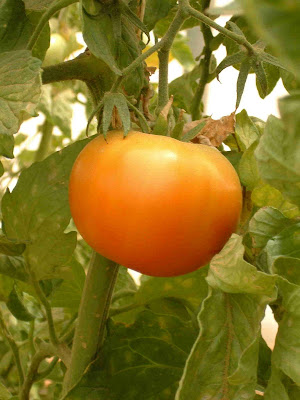
Tomate criado en las matas del Huerto "Extremadura", Campo de refugiados saharauis de Dajla (Argelia), abril de 2006
¿Qué derechos tienen los saharauis en su territorio (el poquito que tienen, pues la mayor parte vive en Argelia o en territorio ocupado por Marruecos)?
En Tifariti también se están construyendo viviendas en el Barrio de la Solidaridad, hay un buen hospital y una escuela.

Construcción de viviendas en Tifariti
(Cooperación Descentralizada española)
 Escuela en Tifariti
(Cooperación Descentralizada Española)
 Hospital "Navarra" en Tifariti
Ya está bien de hipocresías. Los hombres y mujeres del Sahara Occidental llevan demasiado tiempo esperando una solución y es lógico que manifiesten su impaciencia. Marruecos juega un extraño juego al que todos le siguen.
¿Cuál es la opción estratégica de los Estados Unidos?
El congresista republicano Joe Pitts dijo bien claro en 2004 que el Acuerdo de Libre Comercio entre los EE.UU. y Marruecos no se puede aplicar a los bienes y servicios originados en el territorio del Sahara Occidental, la mayor parte de cuyo territorio fue ocupado ilegalmente por Marruecos en 1975:
¿Qué hace la Unión Europea?
European Parliament resolution on human rights in Western Sahara, 27 de octubre de 2005
Sahrawian refugees facing their future
Vaquer i Fanés, Jordi The European Union and Western Sahara. 2003
¿Que dice el Gobierno de España?
España aboga por una solución que respete la autodeterminación. Bernardino León, Secretario de Estado de Asuntos Exteriores, 22 de noviembre de 2007
http://actualidad.terra.es/articulo/espana_sahara_occidental_2049000.htm
Vale.
Suscribirse a:
Entradas (Atom)